

Table of Contents
- Premium Toilet Paper vs Supermarket Brands: The Key Differences
- Understanding Toilet Paper Ply Explained
- What Does GSM Mean for Toilet Paper Quality
- Material Quality: Virgin Pulp vs Recycled Fibres
- Best Value Toilet Roll Per Sheet: Calculating True Cost
- Strength, Absorbency, and Durability: What Matters
- Conclusion: Is Premium Toilet Paper Worth the Investment
- Frequently Asked Questions
Last Updated: October 4, 2026
Premium Toilet Paper vs Supermarket Brands: The Key Differences
When you're standing in the aisle comparing toilet paper options, the price difference can feel absurd. A pack of premium tissue costs nearly twice as much as the supermarket own-brand sitting right next to it. So what are you actually paying for?
The answer isn't marketing hype. Premium toilet paper differs from budget alternatives in measurable ways: ply count, fibre quality, absorbency, and durability. Understanding these differences helps you decide whether the premium price makes sense for your household or business.
At Leaora, we manufacture premium 3-ply toilet tissue from 100% virgin pulp. We've spent years perfecting the balance between softness, strength, and value. This guide breaks down exactly what separates premium tissue from supermarket brands, so you can make an informed choice rather than guessing based on packaging claims.
Understanding Toilet Paper Ply Explained
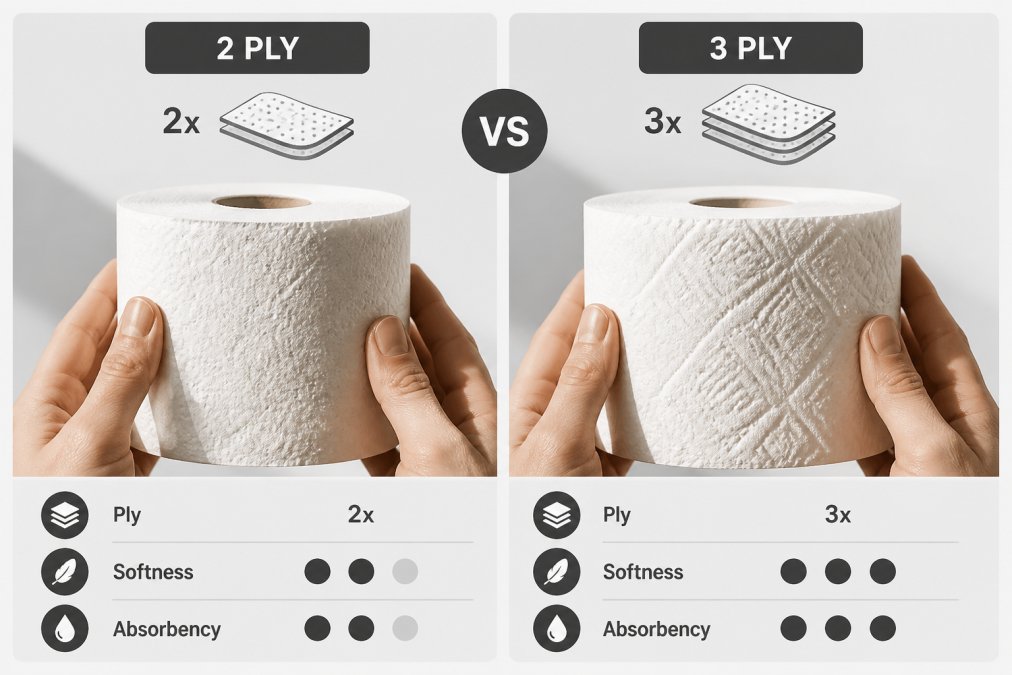
Ply refers to the number of tissue layers bonded together in a single sheet. A 1-ply tissue has one layer. A 2-ply has two. A 3-ply has three.
More plies mean greater thickness, strength, and absorbency. A 3-ply sheet can absorb more moisture and withstand more pressure without tearing compared to a 1-ply or 2-ply alternative.
Most supermarket own-brand toilet paper is 2-ply. This provides basic functionality at minimal cost. Premium brands typically offer 3-ply construction, which feels softer and performs better during use.
The quilting pattern also matters. A quilted 3-ply tissue traps air between layers, creating cushioning that improves comfort and absorbency.
What Does GSM Mean for Toilet Paper Quality
GSM stands for grammes per square metre. It measures the weight and density of the tissue material itself.
Higher GSM indicates a denser, more substantial tissue. A toilet paper with 40 GSM feels noticeably different from one with 25 GSM, thicker, more absorbent, and more durable.
Supermarket brands typically range from 20-30 GSM. Premium tissues usually sit between 35-45 GSM. This difference explains why premium paper feels more luxurious and performs better in real use.
GSM becomes especially important for commercial settings. Office buildings, care homes, and hospitality venues benefit from higher GSM tissue that reduces consumption and minimises blockages in plumbing systems.
When evaluating tissue options, GSM provides an objective measurement. You're not relying on marketing language, you can compare actual material density across products.
Material Quality: Virgin Pulp vs Recycled Fibres
The fibre source makes a fundamental difference in tissue quality.
Virgin pulp comes from trees harvested specifically for paper production. These fibres are long, strong, and have never been processed before. Virgin pulp tissue feels softer, absorbs more efficiently, and delivers superior strength.
Recycled fibres come from waste paper that's been processed multiple times. Each processing cycle breaks down the fibres, making them shorter and weaker. Recycled tissue typically feels rougher and tears more easily.
Premium tissue manufacturers use 100% virgin pulp. Leaora's tissue is made entirely from virgin pulp parent reels, ensuring consistent quality and performance. Supermarket brands often blend virgin and recycled fibres to reduce costs, which compromises both softness and strength.
For households with sensitive skin, virgin pulp makes a measurable difference. The smoother fibre structure causes less irritation compared to recycled alternatives.
The environmental question is more nuanced than it appears. Whilst recycled content sounds sustainable, virgin pulp sourced from responsibly managed forests and manufactured locally reduces transportation emissions and supports sustainable forestry practices.
Best Value Toilet Roll Per Sheet: Calculating True Cost
Price per roll tells only part of the story. Price per sheet reveals the true value.
Leaora Essence 3-Ply Quilted Toilet Rolls – 4 Pack | Luxury Tissue →
A supermarket 2-ply roll might cost £0.40 and contain 150 sheets. That's approximately 0.27p per sheet.
A premium 3-ply roll might cost £0.70 and contain 180 sheets. That's approximately 0.39p per sheet.
The premium option appears more expensive. But consider actual usage: the superior absorbency of a 3-ply sheet means you typically use fewer sheets per visit. Many users report needing 20-30% fewer sheets with premium tissue.
Calculate it this way: if you use 40% fewer sheets with premium tissue, the effective cost per sheet drops below the supermarket alternative. You're also getting superior comfort and strength, which adds value beyond the mathematics.
For bulk buyers and businesses, this calculation becomes even more favourable. Buying premium tissue in larger quantities reduces the per-sheet cost whilst ensuring consistent quality across your entire supply.
| Tissue Type | Cost per Roll | Sheets per Roll | Cost per Sheet | Estimated Sheets Used | True Cost per Use |
|---|---|---|---|---|---|
| Supermarket 2-Ply | £0.40 | 150 | 0.27p | 30 sheets | 8.1p |
| Premium 3-Ply | £0.70 | 180 | 0.39p | 20 sheets | 7.8p |
| Leaora Choice 3-Ply | £0.55 | 180 | 0.31p | 20 sheets | 6.2p |
This table assumes typical usage patterns and the reduced sheet consumption that premium absorbency delivers.

Strength, Absorbency, and Durability: What Matters
Strength determines whether the tissue holds together during use. A weak tissue tears or disintegrates, requiring additional sheets and creating mess.
Premium 3-ply tissue resists tearing because longer virgin fibres bond more effectively. The quilted structure adds mechanical strength without brittleness. Supermarket 2-ply tissue, particularly when wet, often fails this basic requirement.
Absorbency measures how quickly and completely the tissue absorbs moisture. Premium tissue with higher GSM and virgin pulp absorbs faster and more thoroughly. This efficiency means fewer sheets needed per use.
Durability refers to how the tissue performs over time and in storage. Premium tissue maintains its integrity in humid bathroom environments. Budget tissue sometimes becomes brittle or develops odours when stored in damp conditions.
For commercial applications, these factors directly impact operational costs. A care home using weak, low-absorbency tissue experiences more frequent plumbing issues, higher labour costs for cleaning, and greater overall consumption. Premium tissue reduces these hidden expenses.
Premium 3-ply quilted tissue combines all three qualities: virgin pulp provides strength, the quilted design enhances absorbency, and higher GSM ensures durability throughout storage and use.
Conclusion: Is Premium Toilet Paper Worth the Investment
Premium toilet paper costs more upfront but delivers measurable value through superior absorbency, strength, and durability. For most households, the reduction in sheets used offsets the higher per-roll price, making premium tissue genuinely cheaper in practice.
The choice depends on your priorities. Budget tissue works for basic functionality. Premium tissue improves comfort, reduces consumption, and performs better in real-world conditions.
For households and businesses seeking reliable, high-quality tissue that performs consistently, Leaora offers premium 3-ply quilted toilet rolls made from 100% virgin pulp. Our Leaora Choice 9-Roll Pack offers premium comfort, whilst our Leaora Select 12-Pack provides excellent value for regular household use. Both are manufactured in the UK to consistent quality standards, ensuring you get genuine premium tissue without supply chain uncertainty. Choose Leaora.

Frequently Asked Questions
What does GSM mean for toilet paper quality?
GSM stands for grammes per square metre, it measures the weight and density of the paper. Higher GSM indicates thicker, more durable tissue that resists tearing and provides better absorbency. Premium toilet paper typically has a higher GSM than supermarket brands, meaning each sheet offers more substance and performance. This density directly affects how long a roll lasts and how effectively it cleans.
What is the difference between 2-ply and 3-ply toilet paper?
Ply refers to the number of tissue layers bonded together. 2-ply has two layers, while 3-ply has three. Three-ply toilet paper is thicker, stronger, and more absorbent, requiring fewer sheets per use. Premium brands like Leaora use 3-ply construction with quilted textures to trap moisture and improve cleaning efficiency. Most supermarket own-brands use 2-ply, which feels thinner and tears more easily.
Is premium toilet paper actually better value than supermarket brands?
Yes, when you calculate cost per sheet. Premium toilet paper typically has 30% more sheets per roll and requires fewer sheets per use due to superior absorbency and strength. Leaora's 3-ply rolls contain 180 sheets and cost £3.99 for a 4-pack. Supermarket brands often have fewer sheets, lower strength, and require more usage, increasing total spending over time despite a lower upfront price.
Why should I choose premium toilet paper if supermarket brands are cheaper upfront?
Premium toilet paper offers superior comfort, durability, and efficiency. It doesn't tear mid-use, requires fewer sheets, and feels softer on sensitive skin. For households with children or elderly relatives, the reliability matters. Leaora's virgin pulp construction provides consistent quality across every roll. The upfront cost difference is typically recouped through reduced usage and fewer roll changes.