

Table of Contents
- Why Wholesale Kitchen Towels Matter for Small Businesses
- What to Look for in Wholesale Kitchen Towel Suppliers
- Bulk Kitchen Roll for Catering Operations
- Commercial Kitchen Towel Suppliers UK: Key Considerations
- Absorbent Tea Towels for Restaurants and Food Service
- Managing Minimum Orders and Stock Levels
- Making the Switch to Wholesale Supply
- Frequently Asked Questions
Last Updated: September 28, 2026
Why Wholesale Kitchen Towels Matter for Small Businesses
Sourcing wholesale kitchen towels for small business operations is rarely the first conversation a new owner has with their accountant. Yet it's one of the most impactful purchasing decisions you'll make. The difference between grabbing retail packs from a supermarket and committing to wholesale supply isn't just about price, it's about consistency, reliability, and having the right product on hand when you need it.
Small food service operations, catering businesses, and commercial kitchens face a genuine tension. Retail packaging is convenient but expensive per unit and creates constant reordering headaches. Wholesale supply demands upfront commitment and minimum orders that can feel risky when you're still finding your rhythm. The tension resolves once you understand what separates a genuine wholesale supplier from a distributor simply offering bulk discounts.
Many businesses find that switching to wholesale kitchen towels transforms how they manage stock and budgets. You're not just buying more, you're buying smarter. The consistency matters. When every roll performs the same way, your staff stops complaining about rough patches or poor absorbency. When you know exactly what's arriving and when, you plan better. When you're working with a UK-based manufacturer rather than chasing generic imports, you get reliability built into the supply chain.
At Leaora, we work directly with small businesses on this transition. Here's what actually changes when you make the switch.
What to Look for in Wholesale Kitchen Towel Suppliers
The criteria for choosing a wholesale kitchen towel supplier shift depending on your operation's size and demands. A five-person office kitchen has different needs than a 50-cover restaurant or a catering operation prepping for events.
Start with absorbency and durability. Cheap kitchen towels leave lint, fall apart when wet, and frustrate your team. Premium options, particularly those made from virgin pulp, maintain their strength through repeated use and washing cycles. Test a sample before ordering. Run it through your actual workflow: wiping down surfaces, handling hot pans, absorbing spills. If it shreds or loses structure, move on.
Consistency matters more than most buyers realise. When you're ordering wholesale, you need every roll to perform identically to the last one. Fluctuating quality creates waste. Your staff adapts their techniques to poor product, which slows them down. A reliable supplier maintains strict production standards so you never receive a batch that's noticeably different from the previous one.
Minimum order quantities reveal how serious a supplier is about supporting small businesses. Some manufacturers demand pallets or full cases. Others work with smaller minimums. Understand what you're committing to before you sign. Ask about flexibility if your needs change seasonally, catering operations have peaks and troughs.
Delivery reliability is non-negotiable. Supply chain disruptions have become common enough that you need a supplier who can guarantee stock availability and consistent delivery windows. Ask directly: what happens if they can't fulfil an order? Do they have a backup plan? How do they communicate delays?
Bulk Kitchen Roll for Catering Operations
Catering businesses operate on tighter margins and tighter timelines than most food service. You're managing multiple events, varying venue requirements, and unpredictable demand. Bulk kitchen roll supply becomes critical infrastructure rather than a commodity purchase.
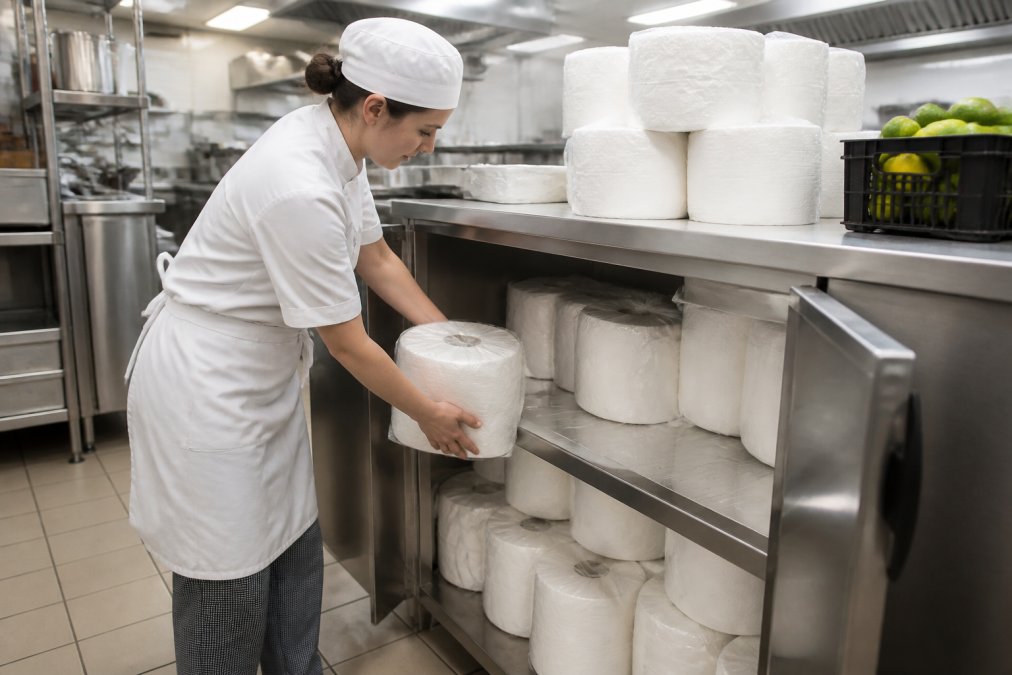
For catering, the calculation is straightforward: high-volume usage, predictable demand patterns, and the need for reliable stock. A 50-person event uses kitchen roll for prep, cleanup, hand-drying, and emergency spills. If you're running multiple events weekly, you'll burn through hundreds of rolls monthly. Bulk purchasing at wholesale rates becomes economically essential.
The key is matching your wholesale commitment to your actual usage. Track consumption across a typical month. Factor in seasonal variation, summer events often run larger than winter ones. Then add a buffer for unexpected demand. Most catering operations find that ordering quarterly works better than monthly; it reduces administrative overhead and often unlocks better per-unit pricing.
Storage becomes a practical constraint. Bulk kitchen roll takes space. Ensure you have dedicated storage that's dry and protected from dust. Damp storage ruins the product. Disorganised storage means you can't find what you need when prep is underway. Invest in simple shelving or a dedicated storage area before your first bulk delivery arrives.
Communication with your supplier matters here more than in smaller operations. Catering demand fluctuates. You need a supplier who can handle occasional rush orders or temporary reductions without penalty. Ask about flexibility clauses in any wholesale agreement.
Commercial Kitchen Towel Suppliers UK: Key Considerations
Choosing among commercial kitchen towel suppliers UK-wide requires understanding what separates genuine manufacturers from resellers and what actually affects product performance in your specific environment.
UK-based manufacturers offer supply chain advantages that matter when you're running a business that depends on consistent stock. Shorter lead times, easier communication, and the ability to resolve issues quickly all flow from working with a supplier in your market rather than managing international logistics. When you need emergency stock or have a quality issue, local support responds faster.
Product specification matters more than marketing claims. Ask suppliers for technical details: ply count, basis weight, absorbency ratings, and whether they use virgin or recycled pulp. Virgin pulp delivers superior strength and absorbency. Two-ply rolls cost less but underperform in commercial kitchens where durability matters. Three-ply virgin pulp is a strong option for professional food service.
Leaora manufactures kitchen towels using 100% virgin pulp parent reels with precision semi-automatic rewinding machinery. This means consistent product finish and retail-ready quality. The difference becomes obvious when your team uses the product daily, no surprises, no quality variation between rolls.
Ask about minimum order quantities and whether suppliers offer tiered pricing based on volume. Some suppliers penalise small orders; others build flexibility into their structure. Understand the full cost picture: unit price, delivery charges, and any setup fees. The lowest per-roll price means nothing if delivery costs or minimums push your total spend higher than alternatives.
Absorbent Tea Towels for Restaurants and Food Service
Restaurant kitchens have specific demands that standard kitchen towels don't always meet. You need absorbent tea towels that handle both wet work and heat without degrading. The product needs to stay functional through dozens of wash cycles.
Absorbency isn't just about how much liquid a towel holds, it's about how quickly it releases that moisture when wrung out. Poor-quality towels absorb water but hold it, staying damp and useless. Premium options dry quickly and regain absorbency after washing. This matters in a professional kitchen where you're cycling through towels constantly.
Durability through repeated laundering separates quality from economy options. Restaurant towels get washed multiple times weekly. Cheap towels fray, lose absorbency, and need replacement within months. Better products maintain performance through years of use. The cost per wash cycle actually favours premium options when you factor in replacement frequency.
Lint is a genuine problem in food preparation areas. Towels that shed fibres create food safety concerns and require more frequent surface cleaning. Virgin pulp towels can offer benefits in commercial kitchens.
Size matters too. Larger towels offer more versatility, you can use them for hand-drying, surface wiping, or larger spill management. Smaller towels force you to use more of them per shift. Wholesale suppliers typically offer multiple sizes; choose based on your actual workflow rather than assuming smaller is more economical.
Managing Minimum Orders and Stock Levels
The transition from retail to wholesale always includes a conversation about minimum orders. This is where the decision becomes real: you're committing to a volume that requires confidence in both the product and your consumption rate.
Most wholesale suppliers set minimums in cases or partial pallets. A case typically contains 96 rolls of standard kitchen towel. A partial pallet might be 5-10 cases. Before you commit, calculate whether that volume aligns with your actual usage. Track consumption for a month if you haven't already. Multiply by 12 to estimate annual usage. Then divide by the minimum order size to see how many orders you'd place yearly.
The financial commitment of a minimum order should feel manageable, not so large that it strains cash flow, but large enough to justify the wholesale pricing.
Making the Switch to Wholesale Supply
The actual transition from retail to wholesale supply is less complicated than many owners expect. It requires three things: a clear understanding of your consumption, confidence in the product quality, and a supplier you trust.
Frequently Asked Questions
What are the main benefits of buying wholesale kitchen towels for a small business?
Bulk purchasing reduces per-unit costs significantly, ensuring your business maintains consistent supplies without frequent reordering. Wholesale kitchen towels from UK manufacturers offer reliable quality and supply chain stability. You'll also benefit from simplified inventory management and the ability to forecast spending more accurately. For food-related businesses, wholesale options often provide superior absorbency and strength compared to retail alternatives.
How do I know which commercial kitchen towel suppliers UK can actually meet my delivery needs?
Reliable suppliers should provide clear information about minimum order quantities, delivery timescales, and their ability to handle repeat orders consistently. Ask about their manufacturing capacity and whether they hold stock ready for dispatch. UK-based manufacturers typically offer faster delivery and more responsive customer service than overseas suppliers. Request references from existing small business customers and confirm they can fulfil your volume requirements before committing.
What's the difference between absorbent tea towels for restaurants and standard kitchen towels?
Restaurant-grade tea towels are typically constructed with higher GSM weights and superior absorbency to handle high-volume, repeated use in food service environments. They're designed to withstand frequent washing without degradation. Standard kitchen towels may work for occasional home use, but commercial-grade options provide better durability, faster drying, and superior performance under the demands of professional kitchens and catering operations.
Are minimum order quantities from wholesale suppliers realistic for small businesses?
Minimum orders vary by supplier, but many UK manufacturers recognise small business needs and offer reasonable entry points. Rather than assuming minimums are too high, contact suppliers directly with your expected monthly usage. Some suppliers provide flexible ordering options or tiered pricing that works for businesses starting with modest volumes. It's worth discussing your specific requirements, as many are willing to work with growing businesses.