

Table of Contents
- What Makes a Kitchen Roll Truly Sustainable
- How to Choose Eco-Friendly Tissue Products
- Bamboo Kitchen Roll Benefits
- Virgin Pulp vs Recycled Paper Kitchen Roll
- Why British-Made Sustainable Kitchen Roll Matters
- Strength and Performance Without Compromise
- Making the Switch to Sustainable Kitchen Roll
- Frequently Asked Questions
Last Updated: 21 September 2026
What Makes a Kitchen Roll Truly Sustainable
A truly sustainable kitchen roll balances environmental responsibility with practical performance. It means choosing products made from responsibly sourced materials, manufactured with minimal waste, and designed to last through actual use without falling apart mid-task.
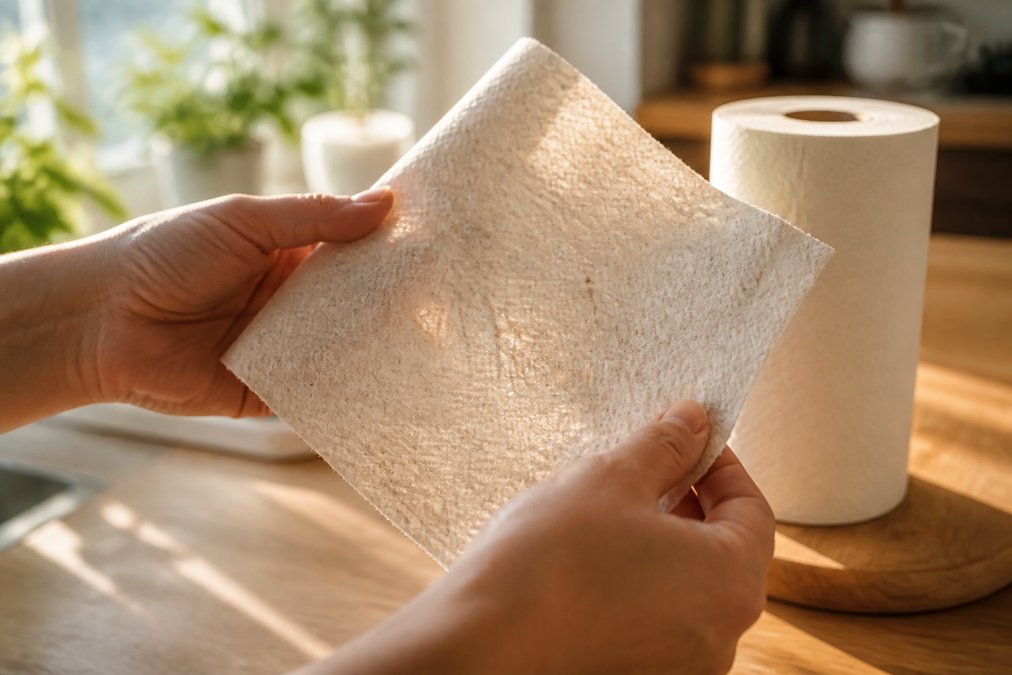
The sustainability question isn't just about the raw material. It's about the entire lifecycle: how the pulp is sourced, how it's processed, how strong the finished product is (because weak rolls mean you use more), and whether the manufacturer takes responsibility for their supply chain. A genuinely sustainable kitchen roll should deliver strength and absorbency without forcing you to compromise on performance.
At Leaora, we've focused on this balance by using 100% virgin pulp parent reels and precision manufacturing to create kitchen rolls that perform reliably. The strength matters because it reduces waste. A roll that tears easily or lacks absorbency means households use more sheets per task, which defeats the purpose of choosing a sustainable option in the first place.
How to Choose Eco-Friendly Tissue Products
Start by understanding what "eco-friendly" actually means in this context. Many products use the term loosely, so look for specific attributes: recycled content percentages, certifications from recognised bodies, manufacturing practices that minimise water use, and strength ratings that indicate you won't need to use more sheets to do the same job.
When evaluating sustainable kitchen roll options, ask these practical questions:
- Does the product come from a manufacturer with verified supply chain practices?
- Is the paper strong enough to handle wet and dry tasks without tearing?
- Does the packaging use recyclable or minimal materials?
- Is the product available at a price point that doesn't force you to compromise your household budget?
The supporting keyword "how to choose eco friendly tissue products" matters because most households don't have time to research every detail. You need a straightforward way to evaluate options. Look for manufacturers willing to share specifics about their sourcing, processing methods, and certifications. Vague marketing language is a red flag.
One common mistake is assuming "eco-friendly" automatically means lower quality. The best sustainable kitchen roll performs as well as conventional products while addressing environmental concerns. If a product forces you to choose between sustainability and actual usability, it's not a genuine solution.
Bamboo Kitchen Roll Benefits
Bamboo has become popular in the sustainable tissue market because it grows quickly without requiring replanting, regenerates after harvesting, and requires less water than conventional pulp crops. These characteristics make it an appealing option for environmentally conscious households.
However, bamboo kitchen roll comes with trade-offs worth understanding. The processing required to convert bamboo into usable pulp involves chemical treatments that must be managed responsibly. Some manufacturers handle this better than others. The strength of bamboo-based products varies significantly depending on processing methods and whether the manufacturer blends it with other materials.
For many households, bamboo kitchen roll works well if the manufacturer has invested in quality processing. The real question is whether the environmental benefit of using bamboo outweighs the processing impact. This depends entirely on the manufacturer's practices, which is why supply chain transparency matters more than the material choice alone.
Virgin Pulp vs Recycled Paper Kitchen Roll
This comparison matters because it directly affects both environmental impact and product performance. Virgin pulp comes from freshly harvested timber, whilst recycled paper comes from post-consumer waste. Each approach has genuine advantages and real limitations.
Virgin pulp typically produces stronger, more absorbent paper because the fibres haven't been broken down through previous processing cycles. This matters for kitchen roll specifically, because strength directly affects how much you use. A stronger roll means fewer sheets per task, which can offset the environmental cost of using virgin material.
Recycled paper reduces demand for new timber harvesting and diverts waste from landfill. However, recycled fibres are shorter and weaker than virgin fibres, which means recycled kitchen roll often requires more sheets to accomplish the same task. Over time, this can mean using more total paper despite the recycled content.
The honest answer is that neither option is universally "better." Virgin pulp from responsibly managed forests can be more sustainable overall than recycled paper if you account for usage rates and manufacturing efficiency. Conversely, recycled paper from well-managed waste streams avoids new harvesting entirely. The key is whether the manufacturer actually manages their sourcing responsibly, regardless of which material they choose.
| Aspect | Virgin Pulp | Recycled Paper |
|---|---|---|
| Strength | Higher | Lower |
| Absorbency | Superior | Adequate |
| Sheets per roll | Fewer needed | More needed |
| Environmental impact | Depends on forestry practices | Depends on waste collection |
| Processing water use | Moderate | Lower |
| Cost | Typically higher | Typically lower |
Why British-Made Sustainable Kitchen Roll Matters
Choosing British-manufactured kitchen roll reduces transportation emissions and supports domestic manufacturing capacity. When you buy from a local producer, the environmental cost of shipping is significantly lower than importing from overseas. More importantly, local manufacturers tend to have greater accountability to their market and clearer supply chain visibility.
Leaora's commitment to domestic production means we control our entire manufacturing process, from pulp sourcing through to the finished product. This level of control allows us to maintain consistent quality and verify our sustainability claims directly, rather than relying on third-party suppliers who may not share the same standards.
British-made products also support local employment and manufacturing infrastructure. When households and businesses prioritise domestic suppliers, it strengthens the case for maintaining manufacturing capacity in the UK. This has long-term implications for supply chain resilience, as recent years have demonstrated, having reliable domestic production matters when global supply chains face disruption.
Strength and Performance Without Compromise
The most overlooked aspect of sustainable kitchen roll is that it must actually work. A product that falls apart when wet, tears easily, or requires double sheets defeats the purpose of switching to a sustainable option. You end up using more paper overall, which wastes both money and the environmental benefits you're trying to achieve.
Strength comes from fibre quality and manufacturing precision. Leaora uses 100% virgin pulp parent reels and precision 1400mm semi-automatic rewinding machinery to ensure consistent strength and absorbency across every roll. This isn't marketing, it's the practical difference between a product that performs reliably and one that forces compromises.
When evaluating sustainable kitchen roll, test it yourself before committing to bulk purchases. Wet strength matters as much as dry strength. A roll that works perfectly for drying hands should also handle spills and cleaning tasks without falling apart. This is where many eco-friendly alternatives fail: they prioritise the environmental story whilst delivering inferior performance.
The best sustainable kitchen roll performs as well as conventional products. If you're choosing between a stronger conventional option and a weaker sustainable one, the conventional choice might actually be more sustainable overall because you'll use less of it. Look for products that deliver both sustainability and genuine performance.
Making the Switch to Sustainable Kitchen Roll
Switching to sustainable kitchen roll doesn't require overhauling your entire household routine. Start by replacing your current brand with a sustainable alternative and observe how it performs over a few weeks. Pay attention to strength, absorbency, and how many sheets you actually use per task.
If you're buying in bulk, consider starting with a smaller order to test the product before committing to larger quantities. This reduces risk and gives you time to assess whether the sustainable option genuinely works for your household. Many people discover that once they find a sustainable product that performs well, they're willing to stick with it long-term.
Cost is often a concern, but bulk purchasing from a manufacturer can offer better value whilst ensuring consistent supply. Direct manufacturing relationships can eliminate middle-men and allow for better pricing without sacrificing quality.
The practical steps are straightforward: identify what matters most to your household (environmental impact, strength, price, British manufacturing), evaluate options against those criteria, test a product before buying in volume, and then establish a reliable supply chain. This approach removes guesswork and helps you make a decision based on actual performance rather than marketing claims.
Switching to sustainable kitchen roll is a practical choice, not a sacrifice.
Frequently Asked Questions
Are bamboo kitchen rolls actually more sustainable than standard options?
Bamboo grows quickly without requiring replanting, making it renewable. However, processing bamboo into paper requires chemicals and energy. The true sustainability advantage depends on the manufacturer's processing methods and overall supply chain. Virgin pulp from responsibly managed forests can be equally sustainable when sourced from certified suppliers committed to environmental stewardship.
How do I choose eco-friendly tissue products for my household?
Look for products made from sustainably sourced materials, check for certifications from recognised environmental bodies, and consider the manufacturer's supply chain transparency. Assess strength and absorbency to avoid waste from needing multiple sheets. British-made options reduce transport emissions. Ask suppliers about their sourcing practices and production methods before committing to bulk purchases.
Is recycled paper kitchen roll better for the environment than virgin pulp?
Both have environmental trade-offs. Recycled paper saves trees and uses existing materials, but requires de-inking processes that consume water and energy. Virgin pulp from sustainably managed forests supports reforestation and offers superior strength, reducing sheet waste. The best choice depends on your priorities: resource conservation or performance efficiency. Consider your household's actual usage patterns when deciding.
What should I look for in a sustainable kitchen roll before buying?
Check absorbency ratings, ply thickness, and strength specifications to ensure performance matches your needs. Verify the source of raw materials and manufacturing location. Look for transparency about supply chain practices. Compare cost-per-sheet rather than pack price to assess true value. Request product samples or reviews from existing customers to confirm quality before committing to bulk orders or switching suppliers.