

Table of Contents
- What Is 3-Ply Virgin Pulp Tissue?
- Virgin Pulp vs Recycled Toilet Paper
- 2-Ply vs 3-Ply Toilet Paper: Strength, Softness and Sheets Per Roll
- Is 3-Ply Toilet Paper More Economical?
- 3-Ply Kitchen Towel Absorbency: Why Ply Count Matters
- Everyday Comfort and Sensitive Skin
- Choosing the Right 3-Ply Virgin Pulp Pack for Your Home or Business
- Conclusion
- Frequently Asked Questions
Last Updated: 12 October 2026
What Is 3-Ply Virgin Pulp Tissue?
3-ply virgin pulp tissue is bathroom or kitchen paper built from three bonded layers of paper made entirely from new wood fibre rather than recovered material. That combination of ply count and fibre source is what separates it from most supermarket tissue.
At Leaora, we produce our Essence and Choice ranges from 100% virgin pulp parent reels at our converting facility, which means the fibre going into every roll is new, consistent and free from the variability that comes with mixed recycled stock.
Three layers do more than add bulk. Each ply is bonded to the next, so the sheet resists tearing when wet while staying soft against the skin. For households that have put up with thin, shedding paper for years, the difference is immediate.
Below, we break down how virgin pulp is made, where recycled tissue falls short, and how to work out whether 3-ply actually saves you money.
Virgin Pulp vs Recycled Toilet Paper
Virgin pulp tissue is made from new wood fibre, while recycled tissue is made from recovered paper that has already been used at least once. The two behave differently in the bathroom, and the gap shows up most clearly in strength when wet.
How Virgin Pulp Is Made
Wood chips are cooked down to separate the cellulose fibres, then washed and screened to remove impurities before being pressed and dried into large parent reels. Because the fibre has never been through a previous product cycle, it retains more of its natural length and bonding strength. That longer fibre is why virgin pulp sheets hold together better under load.
Where Recycled Tissue Falls Short
Recycled fibre gets shorter and weaker every time it is reprocessed. Manufacturers compensate by adding layers or binders, but the result is usually a sheet that feels rougher and sheds more lint. If you have sensitive skin or a septic system, that lint and roughness matter more than the price difference.
2-Ply vs 3-Ply Toilet Paper: Strength, Softness and Sheets Per Roll
3-ply toilet paper uses three bonded layers instead of two, which increases wet strength and softness without needing a heavier single sheet. In practice, that means fewer sheets per visit and less risk of a finger breaking through.
The trade-off most shoppers miss is sheet count. A 2-ply roll often carries more sheets than a 3-ply roll of the same diameter because each 3-ply sheet is thicker. What matters is how many sheets you actually use per trip to the bathroom, not how many are on the roll.
Here is how the two compare on the factors that decide whether you reorder:
| Factor | 2-Ply | 3-Ply |
|---|---|---|
| Layers per sheet | Two | Three |
| Wet strength | Moderate | High |
| Softness | Standard | Plush, quilted |
| Sheets used per visit | More | Fewer |
| Best for | Occasional use, tight budgets | Family bathrooms, sensitive skin |
A common mistake is judging value by sheet count alone. A roll with more, thinner sheets can end up costing more per clean than a 3-ply roll with fewer, stronger sheets.
Is 3-Ply Toilet Paper More Economical?
3-ply toilet paper is often more economical than 2-ply once you measure cost per clean rather than cost per roll. The higher upfront price is offset by using fewer sheets each time, so the pack lasts longer than the roll count suggests.
Cost Per Clean, Not Cost Per Roll
Work out what a single bathroom visit actually costs. If a 2-ply roll needs eight sheets and a 3-ply roll needs five for the same job, the 3-ply roll is delivering more cleans per pack even when it costs more on the shelf. Buying in bulk widens that gap further, because the price per roll drops as pack size rises.
For families, the calculation usually favours 3-ply. For a single-person household that gets through a roll slowly, 2-ply can still make sense. This is where the "is 3-ply toilet paper more economical" question has no single answer: it depends on how many people are using the bathroom and how often you reorder.
3-Ply Kitchen Towel Absorbency: Why Ply Count Matters
3-ply kitchen towel absorbency comes down to how many layers of fibre are available to trap liquid. Each additional ply adds capacity, so a three-layer towel soaks up more before it reaches saturation and starts spreading moisture instead of holding it.
That matters most for the jobs that go wrong with thin towels: mopping up a spill, wiping down a hob, or drying a rinsed surface. A 3-ply towel holds its shape when wet, so you are not left with a sodden, disintegrating sheet halfway through the job.
120 Mega Bundle Leaora Essence Toilet Tissue | 3-Ply Rolls →
The same logic that applies to bathroom tissue applies here. Ply count and fibre quality decide performance, not the marketing on the wrapper. Virgin pulp keeps its structure when wet, which is exactly what you want from a towel you are wringing out and reusing.
Everyday Comfort and Sensitive Skin
Comfort and skin tolerance are the reasons most households switch to 3-ply virgin pulp in the first place. New fibre has fewer of the short, rough particles that recycled stock carries, so the sheet glides rather than drags.

If your family has reacted badly to rough paper before, the fibre source matters as much as the ply count. Virgin pulp is screened to remove contaminants during production, and because it has not been through a previous use cycle, there is less residual material to irritate skin. Leaora's Essence and Choice rolls are fragrance-free and quilted, which suits households that want softness without added scent.
A common mistake is assuming all 3-ply paper is gentle. Ply count tells you about strength; the fibre source tells you about softness. You want both.
Choosing the Right 3-Ply Virgin Pulp Pack for Your Home or Business
The right pack size depends on how quickly you get through rolls, not on which one looks cheapest per unit. Match the bundle to your household or premises and the cost per clean falls into line.
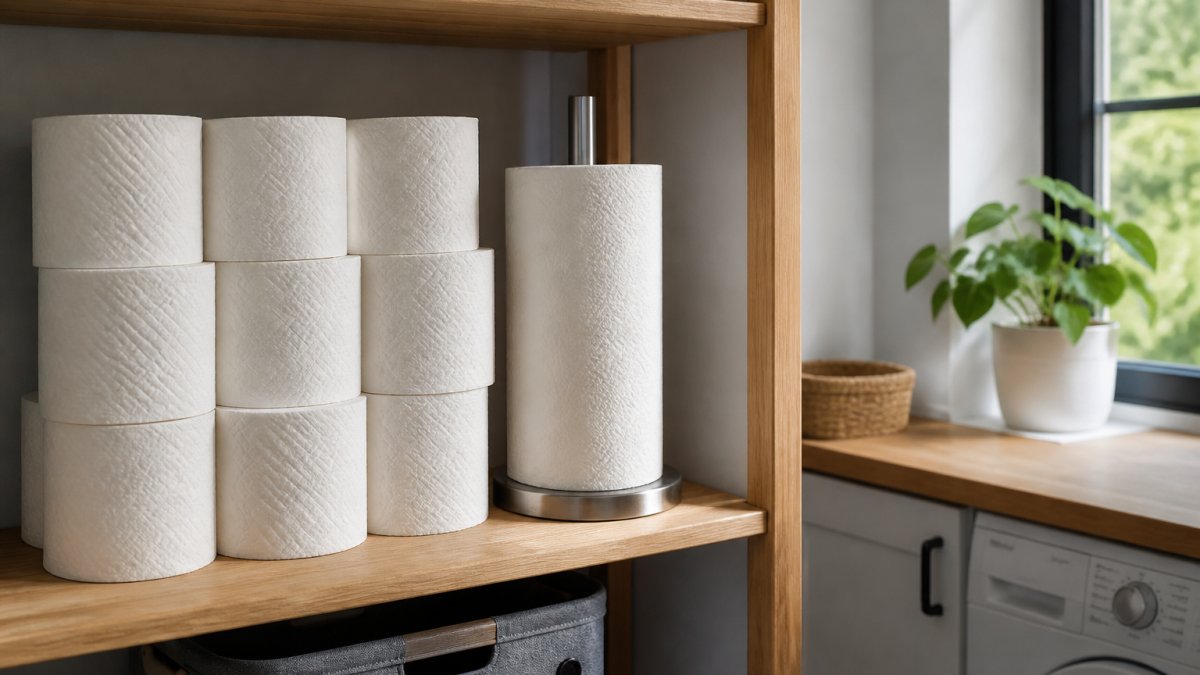
For a single bathroom or a guest loo, the Leaora Essence 3-Ply Quilted 4 Pack at £3.99 is the low-commitment way to try virgin pulp before buying in volume. Apartments and smaller homes tend to settle on the Leaora Choice 9-Roll Pack at £4.99 or the Leaora Essence 40-Roll Pack at £11.49, which covers a family for weeks without filling a cupboard.

Larger households, offices and care settings should look at the 80-Roll Bulk Box at £20.49 or the 120-Roll Mega Bundle at £27.99, both of which cut the cost per roll sharply. Every roll in these bundles carries the same 3-ply, 180-sheet specification, so buying bigger does not mean dropping quality.
Because we manufacture in the UK and supply direct, we can hold consistent stock across these pack sizes rather than pushing you towards whatever happens to be left on a pallet.
Conclusion
The real challenge with premium tissue is not finding a soft roll once, it is finding one you can reorder with confidence month after month. Leaora manufactures 3-ply virgin pulp toilet tissue and kitchen towels in the UK, supplying everything from a 4-roll trial pack to a 120-roll mega bundle direct from our converting facility. Every roll uses 100% virgin pulp parent reels and a consistent 3-ply, 180-sheet finish, so the quality you open today is the quality you get on the next delivery. Choose Leaora for a dependable supply of premium tissue for your home or business.
Frequently Asked Questions
What are the benefits of 3-ply virgin pulp tissue?
Three-ply virgin pulp tissue combines three layers of paper made from new wood fibre, which gives it strength when wet, high absorbency and a soft feel. Because the pulp has not been recycled, it contains no recycled impurities, so the finish is consistent from roll to roll. In practice, that means fewer sheets per clean, less tearing, and a product suitable for both household bathrooms and commercial washrooms.
Is 3-ply toilet paper stronger than 2-ply?
Yes. A third layer adds bulk and structure, so 3-ply toilet paper resists tearing when wet far better than 2-ply. The extra ply also means each sheet holds together with fewer sheets used. For households with children, shared bathrooms or high-traffic washrooms, that added strength translates into fewer mid-use failures and less waste.
Is virgin pulp toilet paper softer than recycled toilet paper?
Virgin pulp fibres are longer and more uniform than recycled fibres, which have already been broken down once. That longer fibre structure produces a smoother, plusher sheet. Recycled tissue can feel rougher because it may contain short fibres and small contaminants. For anyone with sensitive skin, virgin pulp is generally the gentler option, and a quilted 3-ply finish adds softness on top of that.
Is 3-ply toilet paper more economical for families?
It can be, because cost per clean matters more than cost per roll. A 3-ply roll holds 180 sheets and each sheet does more work, so a family uses fewer sheets per trip. Bulk bundles, such as a 120-roll pack, spread the cost further and cut the number of reorders. The saving shows up in how long a pack lasts, not in the shelf price alone.
Does 3-ply toilet paper absorb more?
A three-ply sheet has more layers to trap moisture, so it absorbs more per sheet than a 2-ply equivalent. The quilted texture common to 3-ply tissue also increases surface area, which helps liquid spread and lock in faster. That is why fewer sheets are needed for the same job, and why 3-ply kitchen towels hold up better on spills.
Is virgin pulp tissue better for kitchen towels?
For absorbency and wet strength, yes. Virgin pulp fibres stay intact when wet, so a 3-ply kitchen towel can be wrung out and reused without falling apart. Recycled kitchen towels tend to break down faster once soaked. If you regularly mop up spills, wipe surfaces or dry dishes, the wet strength of virgin pulp makes a noticeable difference in daily use.
What is the difference between virgin pulp and recycled pulp?
Virgin pulp comes from new wood fibre that has never been turned into paper before. Recycled pulp comes from recovered paper that is broken down and re-formed. Virgin pulp gives longer fibres, better wet strength and a cleaner, softer sheet. Recycled pulp reduces waste but produces a shorter fibre, which can feel rougher and tear more easily when wet.