

Table of Contents
- Why Absorbency and Durability Matter for Heavy Cleaning
- Best Kitchen Towel Absorbency Test: How to Compare Before You Buy
- Heavy-Duty Kitchen Roll vs Cloth: Which Wins on Grease and Spills?
- How to Clean Greasy Kitchen Surfaces Without Smearing
- What Separates a Heavy-Duty Kitchen Towel From a Standard Roll
- Choosing the Right Kitchen Towel for Your Household
- Frequently Asked Questions
Last Updated: October 2, 2026
Why Absorbency and Durability Matter for Heavy Cleaning
An absorbent kitchen towel for heavy cleaning is a paper towel built to hold liquid and grease without falling apart mid-wipe. The difference between a towel that works and one that smears is measured in grams per square metre, ply count, and wet strength.
Most households buy on pack size and price. That works fine for wiping a splash of tea. It fails the moment you face a roasting tin, a spilt bolognese, or a hob coated in bacon fat.
This guide breaks down what actually separates a heavy-duty roll from a standard one. We cover the tests you can run in the shop, the cloth-versus-roll debate, and how to clean greasy surfaces without pushing grease around the worktop.
Best Kitchen Towel Absorbency Test: How to Compare Before You Buy
The best kitchen towel absorbency test is simple: drop a sheet into a small bowl of water and time how long it takes to fully saturate. A towel that sinks and holds shape within a few seconds will handle spills. One that floats or breaks apart will not.
You can run this at home with any roll you already own. It takes thirty seconds and tells you more than any claim on the packaging.
The Drop Test and the Weighted Test
The drop test measures how quickly a sheet takes on water. Drop one sheet flat onto the surface of a bowl of water. Watch for three things:
- Time to sink: faster is better for spill response
- Shape retention: does it stay intact when you lift it out?
- Residue: does it leave paper fibres behind in the water?
The weighted test goes further. Wet a sheet, place it over the mouth of a mug, and rest a small weight on top. A heavy-duty towel holds. A standard roll tears within seconds.
What GSM Actually Tells You
GSM stands for grams per square metre. It is the single most useful number on a kitchen towel pack. It measures the density of the paper, not the thickness of the roll.
Higher GSM generally means more fibre per sheet, which means more liquid held before saturation. A towel in the region of 50 to 60 GSM will outperform a thin 35 to 40 GSM sheet on every heavy task. Below that range, you are buying volume, not performance.
Ply matters too. Two-ply and three-ply sheets bond layers together, which raises wet strength. A three-ply sheet at a decent GSM is the sweet spot for heavy cleaning.
Heavy-Duty Kitchen Roll vs Cloth: Which Wins on Grease and Spills?
Heavy-duty kitchen roll wins on grease and hygiene; cloth wins on repeated use and cost over time. The right answer depends on the job.
| Job | Best Choice | Why |
|---|---|---|
| Bacon fat or roasting tin | Heavy-duty roll | Absorbs grease, then goes in the bin |
| Raw meat juices | Heavy-duty roll | Single use avoids cross-contamination |
| Everyday wipe-downs | Cloth | Washable, less waste |
| Dried-on food | Cloth, then roll | Cloth lifts, roll finishes |
| Glass and mirrors | Cloth | No paper fibres left behind |
Cloth has one clear advantage: you wash it and use it again. That matters for routine wiping and drying. It has one clear disadvantage: a cloth used on raw meat needs hot washing before it touches anything else.
Paper roll wins where hygiene and speed matter. You use it once and bin it. No laundering, no lingering bacteria in the fabric.
The practical answer for most kitchens is both. Keep a stack of cloths for daily wiping and a heavy-duty roll for grease, spills, and anything raw.
How to Clean Greasy Kitchen Surfaces Without Smearing
Cleaning grease without smearing comes down to lifting, not wiping. A dry towel dragged across grease spreads it. A towel that absorbs first, then lifts, removes it.
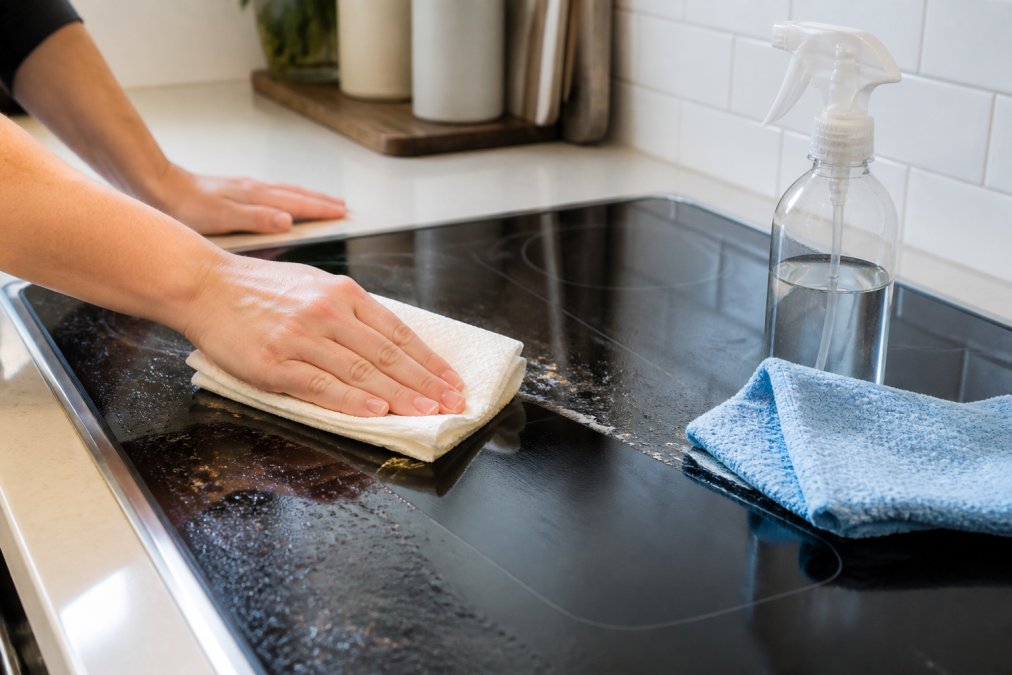
Follow this order:
- Blot first. Press a folded heavy-duty towel onto the grease and hold for a few seconds. Let the paper do the work.
- Apply a degreaser. A warm water and washing-up liquid mix works on most hobs and splashbacks.
- Give it a moment. Let the solution break down the fat before you touch it.
- Wipe in one direction. Back-and-forth smearing pushes grease into clean areas.
- Finish with a dry sheet. A dry towel lifts the last film and leaves no streaks.
The most common mistake is reaching for a wet cloth straight away. Water and oil do not mix, so a wet cloth mostly moves the grease around. Blotting dry first removes the bulk of it.
What Separates a Heavy-Duty Kitchen Towel From a Standard Roll
A heavy-duty kitchen towel differs from a standard roll in four measurable ways: higher GSM, more plies, stronger wet strength, and a tighter emboss. Each one affects how the sheet performs under load.
Standard rolls are built for light wiping. They are thin, often two-ply, and designed to be cheap per sheet. They soak up a small spill and then fall apart if you wring them out.
Heavy-duty rolls add fibre density and bonding. The sheet holds its shape when wet, which means you can scrub a baked-on ring from a hob without the paper shredding in your hand.
Embossing matters more than people realise. A deeper emboss creates pockets that trap liquid and give the sheet grip against a surface. Shallow embossing looks neat but slides over grease.
For households that cook daily, the difference shows up fast. A heavy-duty roll lasts longer per task, so the cost per clean surface is often lower than a cheap roll used twice over.
Choosing the Right Kitchen Towel for Your Household
Match the towel to how you actually cook. A household that reheats and makes toast needs a standard roll. A household that roasts, fries, and feeds a family needs absorbent kitchen towels for heavy cleaning.
Work through these questions before you buy:
- How often do you cook from scratch? Daily cooking means daily grease.
- Do you have pets or young children? More spills, more need for single-use hygiene.
- How much storage do you have? Bulk buying saves money but needs cupboard space.
- Do you buy for a business? Offices and care homes need consistent bulk supply, not supermarket packs.
For bulk buyers, consistency matters as much as performance. A supplier that manufactures its own stock controls the finish and the supply. Leaora produces kitchen towels from 100% virgin pulp parent reels at a UK converting facility, which means the roll you buy in March matches the one you buy in September.
That consistency is what most supermarket shoppers never get. Pack to pack, budget rolls vary in GSM and wet strength depending on what the factory ran that week.
Frequently Asked Questions
What material makes kitchen towels most absorbent?
Virgin pulp fibres, used in most premium kitchen towels, create a dense, open structure that holds water well. Recycled fibres tend to be shorter and less absorbent. Three-ply construction adds more layers for liquid to travel through, so a 3-ply virgin pulp towel usually outperforms a 2-ply recycled one. Leaora uses 100% virgin pulp parent reels, which supports both strength and absorbency in heavy cleaning tasks.
How do you test the absorbency of a kitchen towel?
Try the drop test: place a folded sheet on a worktop, add a measured spoonful of water to the centre, and time how long it takes to soak through. A good heavy-duty towel absorbs within seconds. You can also weigh a dry sheet, soak it, and weigh it again to see how much water it holds relative to its own weight. Repeat across brands to compare fairly.
Are paper or cloth towels better for heavy-duty cleaning?
It depends on the job. Paper kitchen roll wins for grease, food spills, and one-off messes because you can bin it straight away, which limits bacteria spread. Cloth is better for repeated wiping, drying, and polishing, and it can be machine washed. Many kitchens benefit from both: heavy-duty kitchen roll for greasy surfaces and raw meat spills, cloth for everyday drying and buffing.
What is the difference between GSM and absorbency in kitchen towels?
GSM (grams per square metre) measures how much fibre is in the sheet, so a higher GSM usually means a thicker, denser towel. Absorbency is how much liquid that sheet actually takes up and holds. The two are linked but not identical: a high-GSM towel with poor fibre structure can underperform a lower-GSM towel made from virgin pulp. Check both the GSM figure and real-world absorbency before buying in bulk.
Heavy cleaning exposes every weakness in a cheap towel: it tears, smears, and leaves you reaching for a second sheet. Leaora manufactures kitchen towels in the UK from 100% virgin pulp, using precision rewinding for a consistent finish on every roll. The result is superior strength and absorbency, retail-ready presentation, and a supply chain that holds up for both households and commercial buyers. Choose Leaora for kitchen towels built to handle the jobs that standard rolls cannot.